

Whose Amnesia? What 'Science-Based Medicine' Forgot to Tell You About the HPV Vaccine

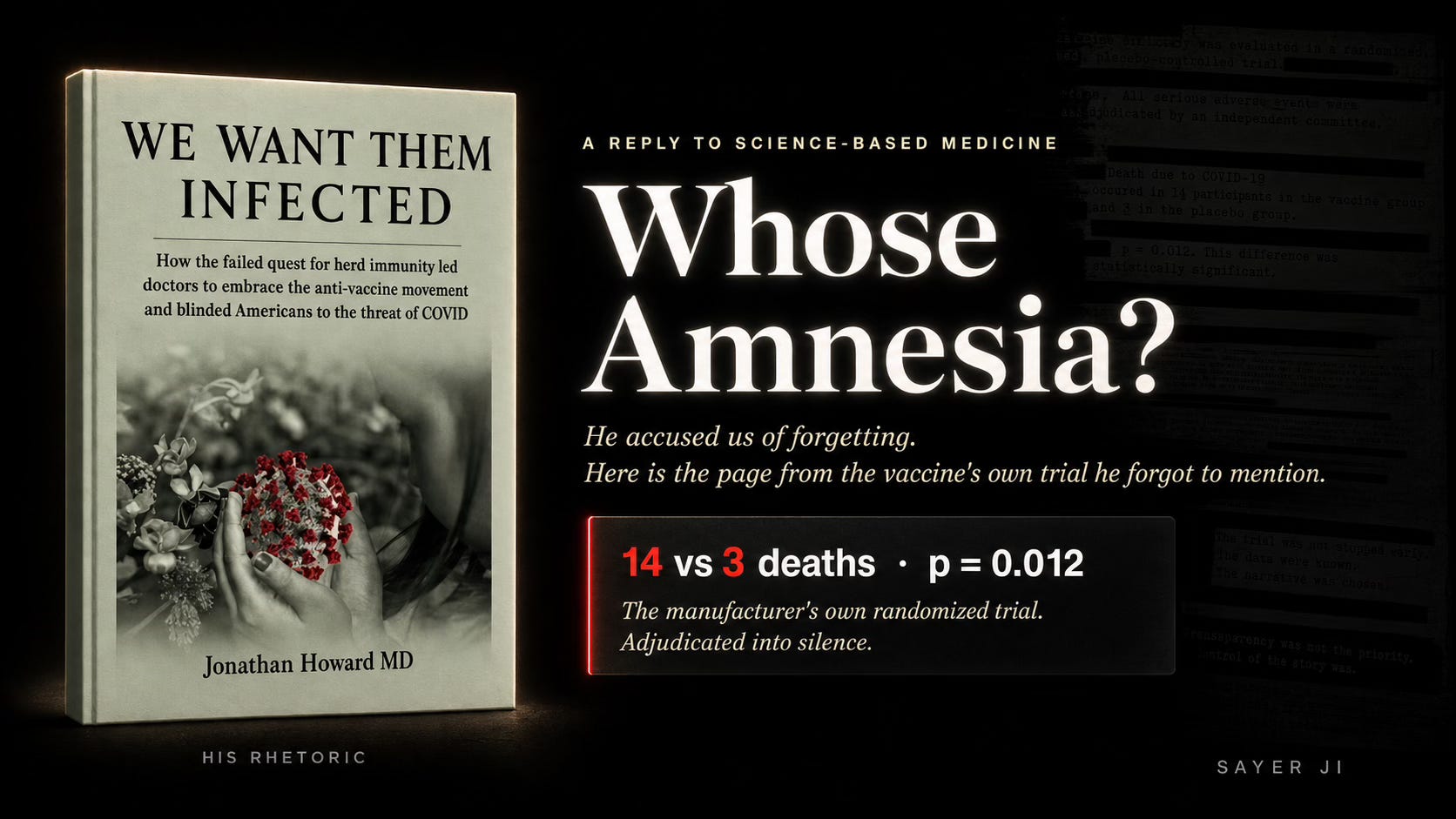
A strangely timed hit piece accusing me of forgetting the HPV literature never mentions the fourteen deaths in the vaccine's own randomized trial. Here is the rest of the ledger, sourced to the manufacturer's data, the WHO's database, and the National Cancer Institute's own words.
Read the primary literature the way its own authors wrote it, and the official HPV story falls apart. Not the caricature — the actual claims, stated without exception or nuance: that HPV is a singular cause of cervical cancer, that the vaccine is a priori safe and effective, that the science is settled. Each of these is softer, hedged, or contradicted in the very papers cited to support it. HPV is found with cervical cancer; the establishment’s own genomics teams call it “necessary but insufficient” to cause it. The vaccine carries a mortality signal in the manufacturer’s own randomized trial (VIVIANE)— fourteen deaths to three — that was adjudicated into silence. And the “settled science” is a relative-risk headline concealing an absolute benefit most parents are never shown.
What follows is ranked by how strongly the evidence supports it, every claim sourced to primary literature you can verify yourself. That ranking is the whole point — and it is exactly what my critics never do.
The accusation
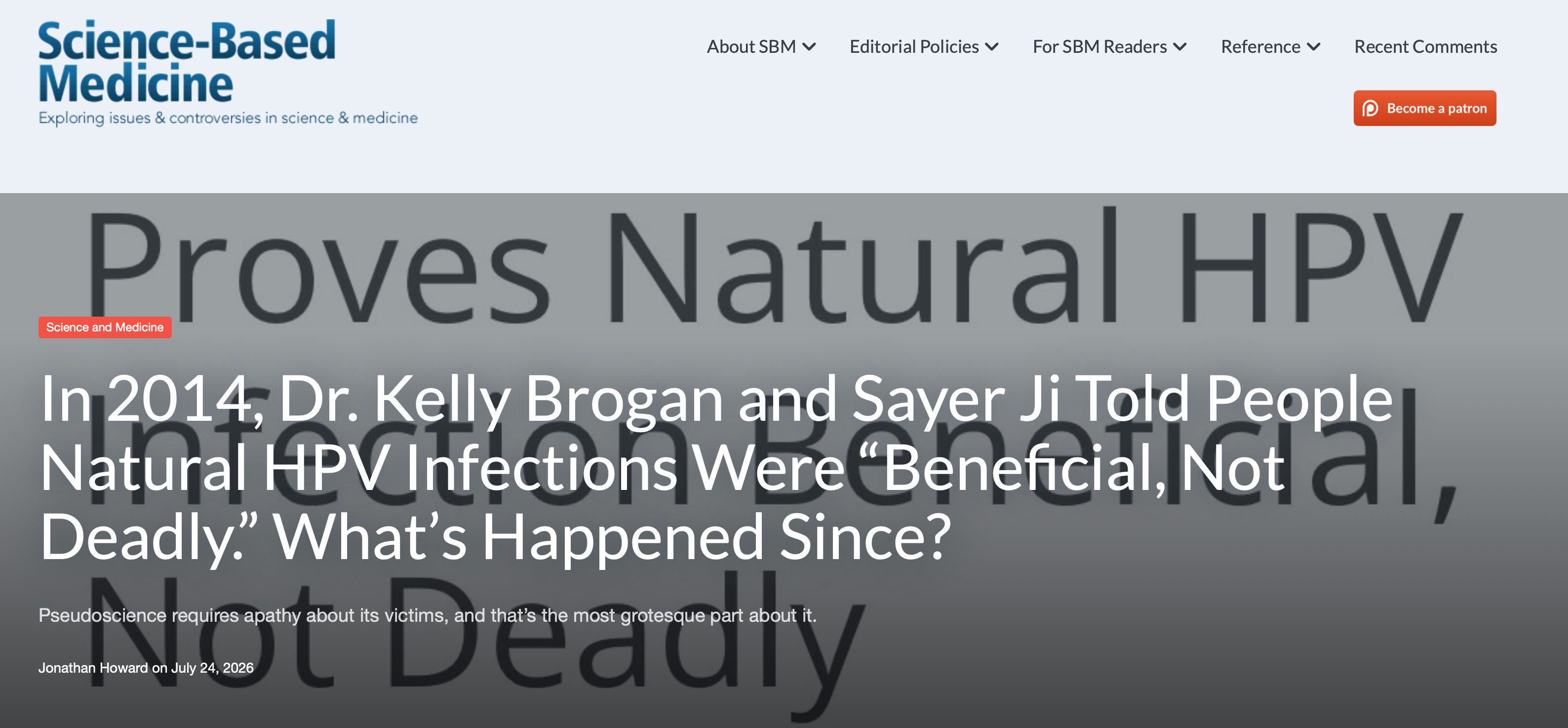
On July 24, 2026, a neurologist and psychiatrist named Jonathan Howard published a piece at Science-Based Medicine titled — in part — “In 2014, Dr. Kelly Brogan and Sayer Ji Told People Natural HPV Infections Were ‘Beneficial, Not Deadly.’” His thesis: that we encouraged people to seek infection with a cancer-causing virus, that we are guilty of “grotesque amnesia” for never recanting, and that he himself would “vanish from public commentary forever” and “spend the rest of my days losing sleep” had he written what we wrote.
It is long on moral condemnation and short on evidence — vociferous where it should be rigorous, certain where it should be careful. The outrage is the argument, because there isn’t much of one underneath. And measured against the primary literature, it is an act of forgetting far larger than the one it accuses.
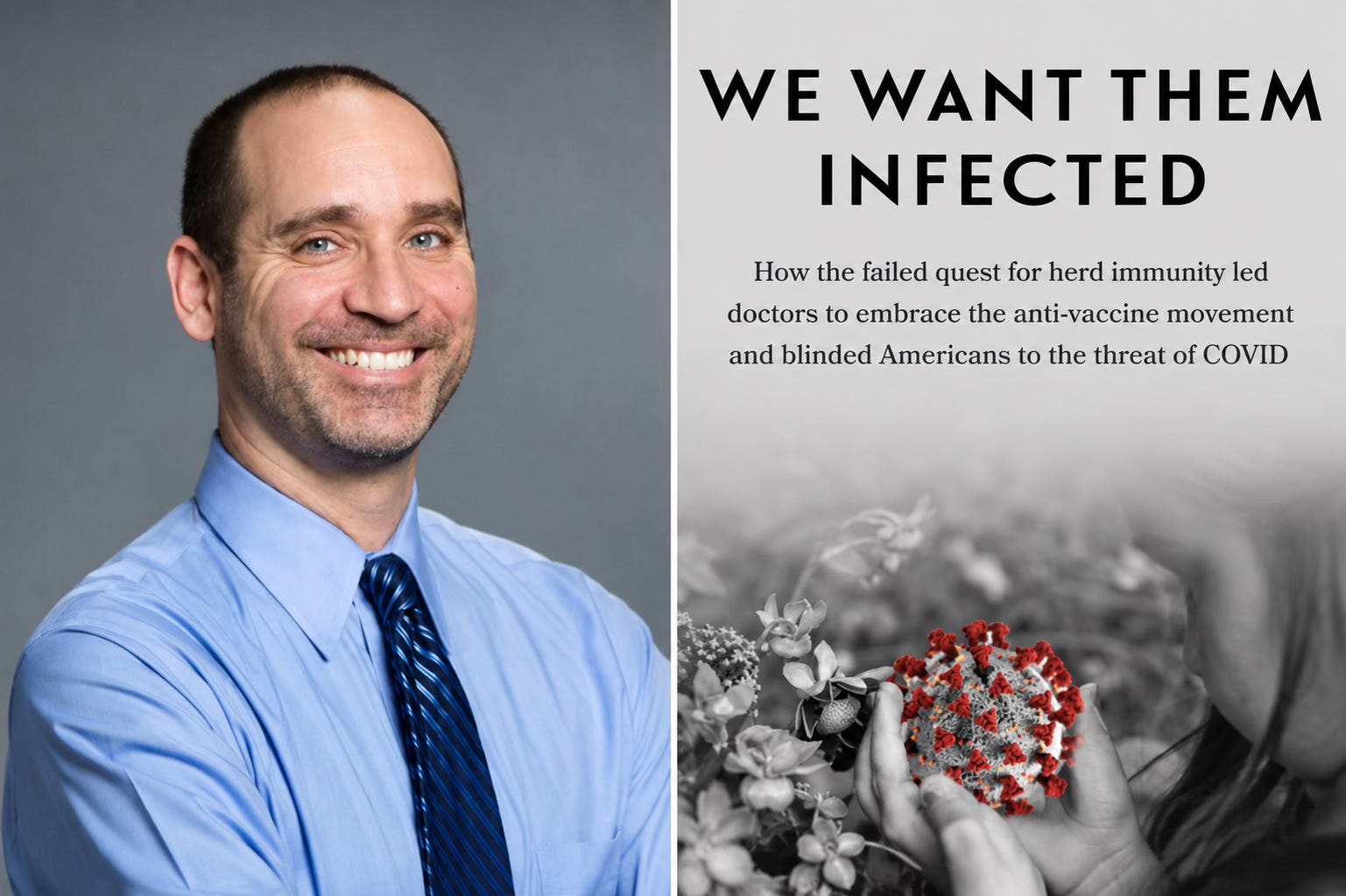
Look at the cover of his book. A child’s hands, a blood-red virus, the words WE WANT THEM INFECTED. It is a masterclass in the very thing he accuses me of — feeling deployed in the place of evidence, the image doing the work the data cannot. So let us do the opposite of his cover. Let us put on the table the one exhibit his entire essay manages never to mention:
From the vaccine’s own randomized trial 14 deaths in the vaccinated group (n = 2,881) versus 3 deaths in the aluminum-control group (n = 2,871). p = 0.012 — statistically significant. The trial’s adjudicators judged that “practically none” of the serious adverse events were vaccine-related. — Martínez-Lavín and Amezcua-Guerra, Clinical Rheumatology 36, no. 10 (2017): 2169–78.
Hold that number. We will come back to it.
Let me be precise about what we actually wrote, what the study actually said, and what the record looks like now — twelve years later — when you read the sources instead of the summary
What we actually said in 2014
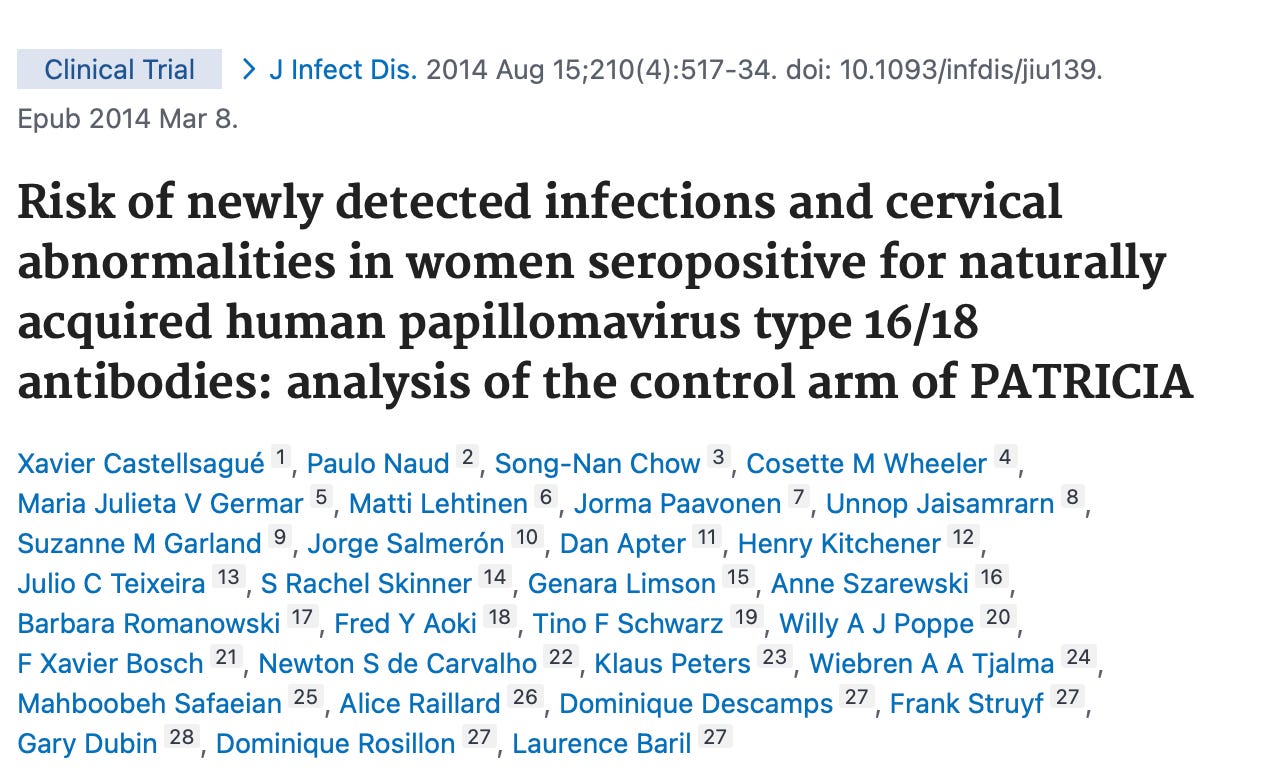
Our 2014 article discussed a single study: the analysis of the control arm of the PATRICIA trial (Castellsagué et al., Journal of Infectious Diseases, 2014; ¹). That study — funded and co-authored by the vaccine’s own manufacturer, GlaxoSmithKline — reached this conclusion, in the authors’ own words:
“Naturally acquired antibodies to HPV-16, and to a lesser extent HPV-18, are associated with some reduced risk of subsequent infection and cervical abnormalities associated with the same HPV type.”
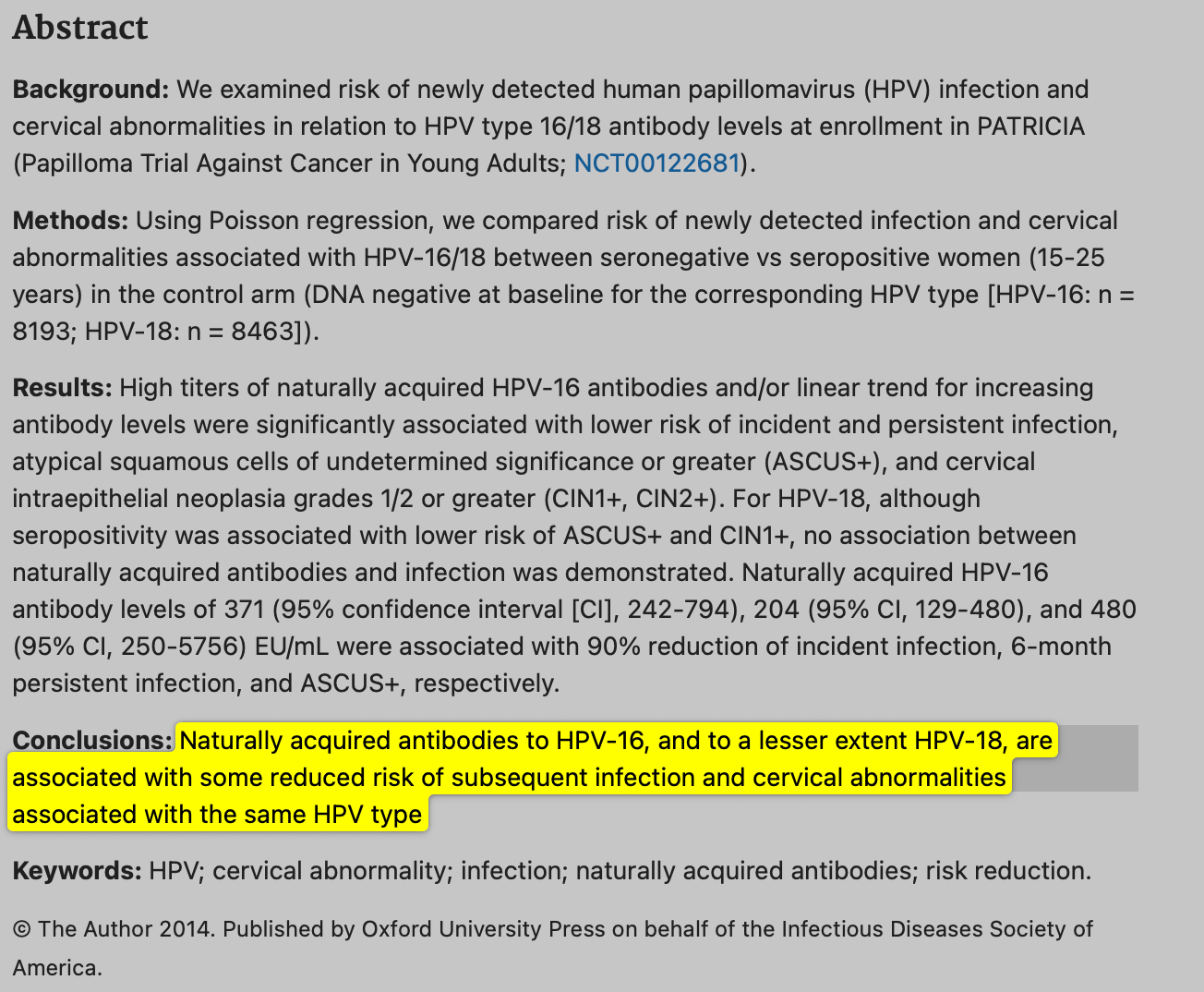
That is what we reported. It is what the study found. Our critics do not dispute the finding itself — David Gorski conceded in 2014 that the vaccine is “pretty crappy at preventing reinfection according to the results of the very study.” What they attacked was the framing: that natural HPV infection could be “beneficial, not deadly.” The reasonable thing to do, a decade on, is to check that framing against everything published since. When you do, it holds up better than it had any right to — not because we defended it, but because the science moved toward it.
Start with “not deadly.”
Only 12 of the 448 known HPV types are classified as carcinogenic. And of those twelve, according to the National Cancer Institute’s own genomics group, “even the most carcinogenic type — HPV16 — only rarely leads to cancer.” That is not my characterization. That is the Division of Cancer Epidemiology and Genetics describing the virus it studies.
Here is what happens to most people who meet it. Roughly 70% of infections are undetectable within a year, and about nine in ten within two (Ho et al., NEJM 1998). Among adolescents and young women who develop the low-grade lesions that trigger the referral, the colposcopy, the biopsy and the fear, 61% regress within twelve months and 91% within three years. No treatment. The immune system does it.
The same NCI paper opens by stating that HPV "causes virtually all cervical cancers and many cancers at other anatomical sites in both men and women." I am quoting that sentence in full, including the part about other sites, rather than making you go find it. Both things are true at once, and holding both is the entire discipline. The virus is necessary for the disease. The overwhelming majority of people carrying it will never develop the disease. Necessary is not sufficient.
So the honest statement is neither “deadly” nor “not deadly.” It is a base rate. And the base rate is that this is a virus most immune systems clear before the person ever knows they had it. Calling it deadly, full stop, describes an outcome the large majority of infected people will never experience.
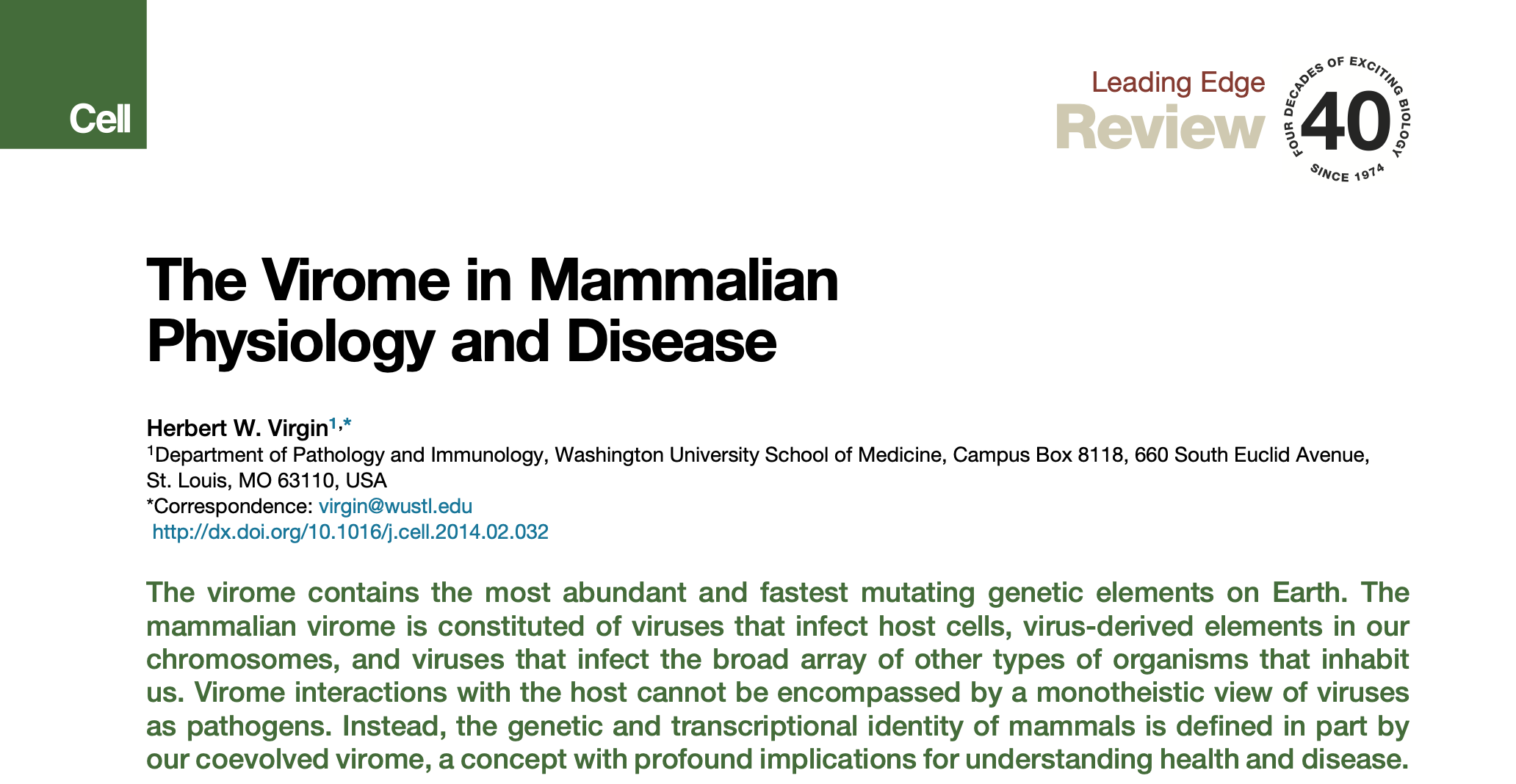
Now “beneficial.” In Cell that same year, the immunologist Herbert Virgin laid out the case that the human virome “cannot be encompassed by a monotheistic view of viruses as pathogens,” that our very biology is “defined in part by our co-evolved virome,”² populated with viruses that are commensal and even mutualistic. HPV lives exactly there: the cutaneous types are ubiquitous on healthy skin, ordinary members of the human virome. And per the manufacturer's own trial data, women who had already cleared an HPV-16 infection carried antibodies associated with meaningfully lower risk of re-detection of the same type. In the seven-year VIVIANE analysis of women over 25, those who entered already seropositive for HPV-16 had a 44% lower rate of six-month persistent infection (HR 0.56, 95% CI 0.32–0.99) and a 72% lower rate of ASC-US or worse (HR 0.28, 95% CI 0.12–0.67) than seronegative women (PMID 31273942). Those authors note the effect was smaller than what had been reported in the younger PATRICIA cohort — so take these as the conservative floor, not the ceiling.
One correction to my own earlier work while I am here. The 90% figure that gets quoted from the PATRICIA paper — including by people on my side of this — is not observed protection. It is a modeled antibody titer threshold: the level at which the model projects a 90% reduction. One of those three confidence intervals runs from 250 to 5,756 EU/mL, which is another way of saying the model could not pin it down. The authors stated plainly that these values do not represent correlates of protection. I noted that caveat in 2014. I am noting it again, because a number that is misused in my favor is still misused.
And the argument underneath the headline was never even about that. It was this: if the trials never used a true placebo, if natural immunity confers real protection, and if antibody titer alone doesn’t predict protection — then we should demand honest, complete, long-term safety accounting before mandating this product for every adolescent on earth. That was the request in 2014. Every year since has only strengthened it.
Twelve years later, that ledger still has not been honestly assembled. Here is what is in it — the part Howard forgot.
The finding they never mention: deaths in the vaccine’s own trial
Now come back to those fourteen deaths, with the full picture around them. Rank this claim at the top: it is the most defensible thing in this article and the most completely absent from Howard’s.
In 2017, two rheumatologists at Mexico’s National Institute of Cardiology — Manuel Martínez-Lavín and Luis Amezcua-Guerra — published a critical review of HPV vaccine serious adverse events in Clinical Rheumatology ³. Reading the manufacturers’ own randomized trials, they found:
“Compared to 2871 women receiving aluminum placebo, the group of 2881 women injected with the bivalent HPV vaccine had more deaths on follow-up (14 vs. 3, p = 0.012).”
Fourteen deaths versus three. In the vaccine arm. In the manufacturer’s own randomized trial. Statistically significant. And for the 9-valent vaccine, they calculated a number needed to seriously harm of 140 against a number needed to vaccinate of 1,757 — what they called, in scientific understatement, “a worrisome number needed to vaccinate/number needed to harm quotient.”
Now, the honest completion of this fact — the part I include because leaving it out would make me no better than the man I’m answering: the trial’s own adjudicators judged that “practically none of the serious adverse events… were judged to be vaccine-related.”
Sit with that. The deaths are real. The statistical signal is real (p = 0.012). The trial’s adjudicators judged that ‘practically none’ of these serious events were vaccine-related — and the published aggregate report gives no case-level detail that would let an independent reader check a single one of those attributions. The deaths were counted. What was never released is the evidence behind the verdict.
Is there a proposed mechanism? One hypothesis points toward the heart.
A death signal without a mechanism is a coincidence. A death signal with one is a hypothesis. Here is the mechanism, and it is not fringe — it is molecular biology.
In 2011, Darja Kanduc at the University of Bari examined the amino-acid sequence of the HPV16 L1 capsid protein — the exact antigen in the vaccine — and found ⁴:
“34 pentamers from the viral capsid protein are shared with human proteins that, when altered, have been linked to short QT syndrome, arrhythmogenic cardiac disorders, cardiovascular diseases and sudden death. In particular, nine out of the 34 viral pentamers are present in a human protein, titin, alterations of which have been linked to cardiac failure and sudden cardiac death.”
The vaccine antigen shares thirty-four sequences with human proteins tied to sudden death — nine of them in titin, the protein that fails in fatal cardiomyopathy. Kanduc and Yehuda Shoenfeld extended the finding in 2016 (Autoimmunity Reviews, ⁵), and the broader mechanism — autoantibodies against cardiac proteins as independent predictors of sudden cardiac death in the young — was reviewed in 2019 ⁶.
This is what “molecular mimicry” means in plain terms: teach the immune system to attack a viral protein that looks like your own heart tissue, and you risk teaching it to attack your heart. It is a hypothesis, not a proof. But it is a biologically coherent hypothesis that makes the trial death imbalance something other than noise.
The WHO’s own database saw a pattern too

If this were only contrarian rheumatologists, one could dismiss it. It is not. The World Health Organization’s own pharmacovigilance center — the Uppsala Monitoring Centre — ran a cluster analysis of every HPV-vaccine report in the global VigiBase database (Chandler et al., Drug Safety, 2017; ⁷). They found four clusters, totaling 694 cases, that formed a coherent syndrome — the now-familiar triad of complex regional pain syndrome, postural orthostatic tachycardia syndrome, and chronic fatigue. Those clusters were far more serious than HPV reports overall:
“These clusters had a higher proportion of serious cases compared with HPV reports overall (44–89% in the clusters compared with 24%).”
The WHO’s own monitors, using the WHO’s own data, identified a disproportionately serious symptom cluster after HPV vaccination. The same syndromes turn up in the clinical case literature: postural tachycardia ⁸, CNS demyelination within days of vaccination ⁹¹⁰¹¹, and primary ovarian failure — three young women, two of them with detectable antiovarian and antithyroid autoantibodies ¹², and three more, unrelated, in different towns in rural New South Wales ¹³.
Now let me be exact about how much that literature can carry, because it is thinner than the footnote count makes it look. Several of these reports come from a small circle of collaborating researchers working inside a single framework, and the cardiac-autoantibody review I cited above shares two of its authors with the mimicry paper it is supposed to corroborate. That is not replication and I am not going to dress it up as replication. Case reports establish that clinicians saw something and thought it worth publishing. They do not establish incidence and they do not establish cause. I rank them below everything else in this article, and I have just told you why.
But notice what is not clustered. The death imbalance is in the manufacturer’s own randomized trial. The symptom clusters are in the WHO’s own database, found by the WHO’s own monitors, using the WHO’s own methods. Those two findings are independent of each other, independent of any advocacy literature, and independent of me. They are also the two that were never followed up.
So here is the actual shape of it: a signal that surfaced in the two most institutionally credible datasets in existence, and a clinical literature small enough to trace to a handful of researchers. That is either evidence that there was never anything to find — or evidence of how few people went looking. I cannot settle that from the outside. Neither can anyone else, which is precisely the problem. The scientific response to a signal like this is to investigate it. The response it received was to adjudicate it away.
No single case report proves causation, and I rank them accordingly — below the trial deaths and the WHO cluster. But this is what an early safety signal looks like — convergent, mechanistically plausible, appearing across passive databases, active case series, and the manufacturers’ own randomized data at once. The scientific response to a signal like this is to investigate it. The response it actually received was to adjudicate it away.
The reporting systems catch a fraction of it
Here is the part that reframes every “the data show it’s safe” reassurance. The systems that are supposed to catch harm capture almost none of it. An AHRQ-funded grant final report by Ross Lazarus and Michael Klompas at Harvard Pilgrim Health Care¹⁴ (grant R18 HS 017045, filed 2011) concluded that “fewer than 1% of vaccine adverse events are reported” to VAERS. When the government’s own funded study says the surveillance system captures under one percent, then every official adverse-event total is not a ceiling — it is a floor, and a low one.
Now the benefit — in the frame they never use
Howard’s closing argument is the 2025 Swedish study (Wu et al., BMJ, 2026; ¹⁵ / bmj-2025-087326): “79% reduction in cervical cancer.” It is the strongest card he holds, so look at how the number is actually built.
Relative risk reduction: ~79%. This is the number in every headline.
Absolute risk reduction: cumulative cervical-cancer incidence by age 34 was about 180 per 100,000 in unvaccinated women versus about 30 per 100,000 in women vaccinated before age 17 — an absolute reduction of roughly 150 per 100,000, or 0.15 percentage points.
Number needed to vaccinate to prevent one invasive cervical cancer: roughly 667. (The 1,757 cited earlier comes from a different trial and a different endpoint; the two are not comparable.)
Both numbers describe the identical data. “79%” sounds like a revolution. “0.15 percentage points, NNV ~667” is the same fact in the frame that lets a parent actually weigh it. Only one of those frames is ever printed. I want to be precise about what this number can and cannot do, because the logic that limits the study’s claim also limits mine. If twenty-seven years of follow-up in a cohort whose median member is thirty-four is too short to have caught the cancers a vaccine might prevent, then it is also too short to establish the true lifetime benefit. That benefit could be larger than 0.15 percentage points, and the number needed to vaccinate correspondingly lower. I am not offering these figures as a final accounting. I am offering them as the accounting this study actually supports, which is a narrower thing than what the headlines claimed.
So the correct conclusion is not “the benefit is small.” It is this: the benefit is not yet measured, and anyone quoting a cancer-prevention figure from this dataset — in either direction — is quoting something the data have not yet produced.
And here is the structural flaw that no relative-risk figure can fix: the Swedish study measured one benefit and zero harms. Its only endpoint was a single diagnostic code for invasive cervical cancer. It counted no deaths from any cause, no autoimmune disease, no cardiac events, no ovarian failure — nothing on the harm side of the ledger at all. Its own investigators conceded to the National Cancer Institute that they “couldn’t account for” whether the vaccinated women simply attended cervical screening more — which, given that the vaccinated group was richer, more educated, and more screening-compliant by the study’s own tables, means an unknown share of that “79%” is who chose the vaccine, not the vaccine itself. This is the healthy-vaccinee effect, and as the peer-reviewed critique of the Cochrane HPV review put it ¹⁶, it “always affects results in favour of an intervention.”
A study that counts one benefit and no harms cannot tell you a product is net beneficial. It can only tell you the benefit exists. That is not the same claim, and the difference is the whole argument. The 2014 claim rested on a premise SBM still refuses to engage: HPV is not a monolith, and cervical cancer is not a monocausal disease. Everything below turns on whether that premise survives the primary literature. It does.
The benefit that could not have happened yet
There is a deeper problem with every “the vaccine prevents cancer” study, and it is arithmetic, not ideology. HPV-associated cancers take twenty to thirty years to develop after the initiating infection. The Swedish cohort followed women to a median age in their thirties. The cancers this vaccine is marketed to prevent — the ones that strike in the forties, fifties, and sixties — could not yet have appeared in most of the cohort. What these studies capture is the thin sliver of unusually early-onset disease, which the oncology literature ties more to underlying immune compromise than to ordinary HPV exposure.
I made this exact argument in April 2026, in detail, about the JAMA Oncology study on boys that the world’s press converted overnight into “cuts cancer risk in half.” That study’s celebrated 46% figure rested on 104 total cancer cases in a cohort of more than a million — an absolute difference of about five cases per 100,000 over up to ten years — and its own outside commentator, an oncologist at Dana-Farber, conceded the latency is “at least ten years and usually twenty-plus.” The study’s follow-up was shorter than the disease it claims to prevent.
I mention that piece for one reason. Howard’s charge is that I have practiced “amnesia” — that I buried my 2014 position and never revisited HPV. The public record says otherwise: I have been publishing rigorous, absolute-risk, primary-source analysis of the HPV vaccine literature this year. The amnesia is not mine.
When 104 Cancer Diagnoses Become a Global Mandate: The HPV Vaccine Study the Media Won’t Tell You About

A small retrospective cohort study out of Japan tracked one cancer type, found 104 cases, and was converted within 48 hours into a synchronized global headline claiming HPV vaccines “cut cancer risk in half” for boys. Here is what the study actually showed — and what the ceaseless amplification is designed to make you forget.
HPV is found with cervical cancer. It does not, by itself, cause it.
Now the deepest layer, and the one where I will stay strictly inside the establishment’s own literature — because the mainstream position, read completely, already says what my critics call heresy.
Start with the National Cancer Institute’s own genomics team. Nelson and Mirabello, writing in Tumour Virus Research in 2023 ¹⁷:
“only 12 of 448 [known HPV types are carcinogens]… even the most carcinogenic type — HPV16 — only rarely leads to cancer. HPV is therefore necessary but insufficient for cervical cancer, with other contributing factors including host and viral genetics.”
Necessary but insufficient. That is the NCI’s phrase, not mine. Of 448 HPV types, twelve are carcinogenic, and the worst of them “only rarely leads to cancer.” The virus is required, but the virus is not enough. Something else has to be true of the host.
What else? Consider where these viruses actually live. Cutaneous HPVs, per a 2018 review in Clinics ¹⁸, are “ubiquitously disseminated throughout healthy skin and may be an intrinsic part of the commensal flora.” Not invaders — residents. Members of the human virome, present on normal skin, pathological only under specific conditions. A 2024 review in FEMS Microbiology Reviews from the French national research center CNRS ¹⁹ makes the frame explicit: papillomaviruses “may only trigger malignant transformation when specific viral genotypes interact with precise cellular states,” and it describes the shift as how “commensal-like infections transition from benign to malignant.”
So what determines the “precise cellular state”? The host ecology — the holobiont, and which is largely conditioned by the exposome. Researchers at the University of Arizona Cancer Center found that “dysbiotic vaginal microbiota have been implicated as contributors to persistent HPV-mediated cervical carcinogenesis” (EBioMedicine 2019, ²⁰). A 2025 review from Rome’s Gemelli IRCCS names the rest of the stack: smoking enhancing viral persistence, deficiencies in folate and antioxidants weakening immune defense, and vaginal and gut microbiome dysbiosis fostering progression ²¹. And cervical cancer occurs even in the complete absence of HPV — Memorial Sloan Kettering calls the split between HPV-associated and HPV-independent cervical adenocarcinoma “one of the most important developments in gynaecological pathology during the past 50 years” (Histopathology 2020, ²²).
Put it together and the honest formulation is not “HPV causes cervical cancer.” It is: persistent HPV, in a permissive host ecology, is one necessary contributor among several. The virus is found with the disease. It does not, by itself, produce it.
In my Poisoned, Not Infected series I dive deep into the exposome-mediated conditions that affect immunity, including inducing pseudoinfections misattributed to viral particles and infections.
Poisoned, Not Infected - An Investigative Series

A Living Guide to Sayer Ji’s Investigation of Disease, Toxic Exposure, Terrain, and Biological Signaling
This is not a rhetorical dodge. It has a direct, testable consequence: if the outcome is governed by the host — immunity, microbiome, nutrition — then the outcome should be reversible when the host recovers. It is. In The Lancet in 2004 ²³, a UCSF cohort found that low-grade cervical lesions regressed spontaneously in 61% of young women within 12 months and 91% within 36 months, and the strongest longitudinal correlate of regression was clearance of the HPV infection itself. The body clears the “cause” on its own, most of the time, with nothing done at all.
You cannot vaccinate away a co-factor relationship. If the disease requires a permissive host, then immune competence, the microbiome, and nutrition are not sideshows to the HPV story — they are the story, and they are precisely what a single-antigen vaccine cannot touch.
The four elephants Howard didn’t see
If HPV is found with cervical cancer rather than causing it in any deterministic sense, then the honest question is: what actually determines who progresses? Here the “Science-Based Medicine” account goes silent. There are at least four causal layers Howard never acknowledges — each with a mainstream peer-reviewed literature spanning decades, and each large enough to invert the risk-benefit calculus of universal vaccination.

1. Not every HPV is a pathogen
Of the 448 known HPV types, only twelve are classified by IARC as Group 1 human carcinogens (Nelson & Mirabello, Tumour Virus Research 2023; IARC Monograph 100B). Most of the rest are not associated with cancer at all, and a growing number are described as commensal residents of the human virome. (Nunes et al., Reviews in Medical Virology2018; Bravo & Félez-Sánchez, Evolution, Medicine, and Public Health 2015).
In 2019, Strickley and colleagues published in Nature the most direct evidence to date: T-cell immunity against commensal papillomaviruses actively protects the skin from carcinogenesis. Remove those viruses in immunodeficient mice and cancer rises (Strickley et al., Nature 2019). The accompanying Nature News & Views called it a paradigm shift: papillomaviruses previously assumed neutral or “carcinogenic bystanders” were now demonstrated as cancer-protective members of the human virome (Nature News & Views).
The principle that removing part of an ecological niche can enrich the pathogenic remainder is not speculative. It is documented rigorously after pneumococcal conjugate vaccination for Streptococcus pneumoniae (Weinberger et al., Lancet 2011). And in 2023, HPV42 — long classified as “low-risk” — was identified as the causal agent of digital papillary adenocarcinoma (Leiendecker et al., Nat Genet 2023). The “low-risk / high-risk” dichotomy is a moving target that has been repeatedly revised. The 2014 argument was not “embrace a virus.” It was: don’t scorch an ecosystem you don’t understand.
2. Host immunity determines who gets cancer, not virus alone
The great majority of women meet HPV — often multiple times — without ever developing dysplasia. This is not because they drew a nicer strain. It is because their host biology cleared it. The peer-reviewed effect sizes for modifiable host factors dwarf anything attributable to viral serotype:
HIV coinfection: pooled RR 6.07 for cervical cancer (Stelzle et al., Lancet Global Health 2021); CD4 <200 carries a hazard ratio of 7.7 for CIN3+ (Denslow et al., Int J Cancer 2014).
Smoking + HPV16 synergy: odds ratio 65.9 for CIN3+ in HPV16-positive current smokers (Ylitalo et al., Cancer Epidemiol Biomarkers Prev 1999).
Long-term oral contraceptive use: ten years of use approximately quadruples cervical cancer risk in HPV-positive women (Moreno et al., Lancet 2002).
Folate deficiency: ~9-fold increased risk of higher-grade CIN (Piyathilake et al., Cancer Prev Res 2009).
HLA class II haplotypes — the strongest single genetic predictor of HPV persistence and cervical cancer progression, per a genome-wide association study in Nature Genetics (Chen et al., Nat Genet 2013).
The 2025 synthesis by Farina and colleagues names the frame directly: cervical carcinogenesis is a multi-hit exposome process in which HPV is a necessary but nowhere near sufficient condition (Farina et al., 2025). The single-axis “virus → cancer → vaccine” story cannot see these variables — and therefore cannot see the women whose real risk lies in modifiable environments and immunocompetence rather than in a viral serotype.
3. The cervicovaginal microbiome is the missing causal layer
A functional Lactobacillus-dominant cervicovaginal microbiome is one of the strongest predictors of HPV clearance. Its disruption — bacterial vaginosis dominated by anaerobes like Gardnerella vaginalis — dramatically increases HPV persistence and progression. This is now one of the most robust findings in HPV research, and it is entirely absent from the SBM narrative.
The definitive meta-analysis (23 studies, N=101,049): bacterial vaginosis was associated with a 2.01-fold increased risk of high-grade lesions or cervical cancer (Brusselaers et al., AJOG 2019).
HPV regression is 3.5× more likely in women whose vaginal microbiome is Lactobacillus-dominant (Mitra et al., Nature Communications 2020).
In 2023, Nicolò and colleagues demonstrated mechanistically that Gardnerella vaginalis directly upregulates the HPV E6 and E7 oncogenes — the exact molecular event that drives cervical carcinogenesis (Nicolò et al., 2023).
A pilot trial at Sapienza University in Rome randomized 117 HPV-positive women with concurrent bacterial vaginosis or vaginitis to standard antimicrobial treatment plus either three or six months of vaginal Lactobacillus rhamnosus BMX 54. At a median follow-up of fourteen months, resolution of HPV-related cytological abnormalities was roughly twice as likely in the longer-duration arm (79.4% versus 37.5%, p=0.041). Complete viral clearance by DNA test was 31.2% versus 11.6% (p=0.044). (Palma et al., BMC Infectious Diseases 2018).
Note carefully what this study is and is not, because I am going to hold myself to the standard I am applying to everyone else. Both arms received probiotics and both received antibiotics. This is a duration-response finding, not probiotic-versus-nothing. The sample is small, the authors call it a pilot, and they explicitly ask for larger randomized trials before anyone draws conclusions. It is a signal worth pursuing. It is not a settled result, and I am labeling it that way because the entire argument of this piece is that labels matter.
Nobody is asking anyone to choose probiotics over a vaccine. That is not the argument and never was. The argument is that one of these was pursued with global urgency and a fifteen-billion-dollar market behind it, and the other — cheap, non-surgical, mechanistically supported, and pointing at the exact molecular event that drives cervical carcinogenesis — has still not received a single adequately powered trial. That is the actual amnesia.
4. Watchful waiting: the option every guideline body endorses and the patient never hears
The most conservative claim in the 2014 essay — that most HPV-associated abnormalities resolve without intervention, and that cutting them out reflexively causes measurable harm — is now the consensus position of every major guideline body on the planet. ASCCP (US, 2019), BSCCP/ESGO (UK/EU, 2025), the WHO (2021, resource-constrained context), and the Italian national body all endorse active surveillance as a first-line option in appropriate patients.
HPV clearance: ~70% within one year, ~90% within two years — in essentially every large cohort ever published, from Ho NEJM 1998 (PMID 9459645) to the CDC’s own Surveillance Manual.
LSIL/CIN1 regression: 61% at 12 months, 91% at 36 months (Moscicki et al., Lancet 2004). The 24-month invasive-cancer risk of simply watching an LSIL is 0.15% (Melnikow et al., 1998).
CIN2 in the definitive systematic review: “In 1000 women aged less than 30 with a diagnosis of CIN2, 600 will experience regression, 230 will remain unchanged, and 110 will progress within two years of active surveillance” (Tainio et al., BMJ 2018).
The 2025 BSCCP/ESGO consensus in Lancet Oncology: “50–60% of CIN2 lesions spontaneously regress, and active surveillance… might be justified in some cases” (PMID 40049205).
And the USPSTF — the US government body SBM would presumably trust as “science-based” — states plainly:
“The USPSTF found convincing evidence that many precancerous cervical lesions will regress and that other lesions are indolent, slow growing, and will not become clinically important over a woman’s lifetime; identification and treatment of these lesions constitute overdiagnosis.” (USPSTF)
Peer-reviewed Dutch microsimulation puts the scale of that overdiagnosis at 74.8% of screen-detected CIN1+ diagnoses(van Luijt et al., Journal of Medical Screening 2016). The cost of ignoring that number is not theoretical. Kyrgiou et al.’s meta-analysis of over 6 million women in BMJ 2016 showed that excisional treatment nearly doubles preterm-birth risk (Kyrgiou 2016), with cold-knife conisation associated with a relative risk of 2.87 for perinatal mortality (Arbyn et al., BMJ 2008).
This is not fringe medicine. It is the ledger. The amnesia is that most women are never told any of it.
Whose amnesia?
So let us total the ledger honestly.
On the benefit side: a real reduction in cervical-cancer diagnoses, inflated by self-selection, absolute magnitude 0.15 percentage points — 667 girls vaccinated to prevent one invasive cancer — in a study blind to every harm.
On the harm side, deliberately left out of the piece accusing me of forgetting: a statistically significant death imbalance in the manufacturer’s own trial (14 vs. 3, p = 0.012), waved away by adjudication; a molecular-mimicry mechanism linking the vaccine antigen to titin and sudden cardiac death; a WHO-database cluster of 694 disproportionately serious cases; case reports of autonomic, neurological, and ovarian injury, from a small clinical literature; and a surveillance system its own government funders say captures under 1% of what actually happens.
And beneath all of it, the causal story the establishment’s own literature tells when you read past the slogan: HPV is “necessary but insufficient” (the NCI’s words), ubiquitous as commensal flora on healthy skin, oncogenic only inside a permissive host — a virus found with cervical cancer, not the singular cause of it, and one the body clears on its own most of the time.
A decade later, the case for what we wrote is stronger than the case against it — built from the manufacturer’s own data, the virome science, the clearance rates, and the establishment’s own words: “necessary but insufficient.” I’m glad to have my 2014 position read next to the literature that followed it. That is all I’ve ever asked of my critics in return.
But the man who calls this “grotesque amnesia” wrote an entire essay about the HPV vaccine’s safety and forgot to mention the deaths in its own trial. He forgot the mechanism. He forgot the WHO’s cluster. He forgot the difference between relative and absolute risk. He forgot that his flagship study measured no harms at all.
That is not amnesia. Amnesia is involuntary — and choosing which half of the evidence a reader sees is a choice. The remedy is simple and it’s the one thing I keep asking for: put all of it on the table, and let people weigh it themselves.
The request in 2014 was for a complete, honest ledger and a true placebo-controlled trial. Twelve years later, we still do not have either. Until we do, the grown-up position is not “safe and effective” and it is not “dangerous and useless.” It is the one thing pharmaceutical marketing cannot abide: we should find out.
A footnote on timing
Why would a neurologist and psychiatrist reach back more than a decade to attack a single 2014 article? The piece presents itself as spontaneous scientific concern. The context suggests something more organized.

Dr. Howard sits on the Scientific Advisory Board of the Accountability Journalism Institute. So does David Gorski — the managing editor of Science-Based Medicine, the very outlet that published this attack. So does Peter Daszak, of EcoHealth Alliance, a central figure in the suppression of the COVID-19 lab-leak hypothesis. So does Wendy Orent, who co-hosts Howard’s own We Want Them Infected podcast. This is not a roster of independent skeptics. It is a small, interlocking world.
And it is a world with a political program. By that institute’s own account, its advisory board was among the organizations that prepared petitions in the 2025 campaign to remove Robert F. Kennedy Jr. as Secretary of Health and Human Services — a coordinated effort I documented at the time.
So consider the actual shape of this: an author attacks me from within an institution running a political campaign against the health-freedom movement I am part of — and discloses none of it. He calls this scientific accountability. Whether you call it coordination or merely a very small world protecting its own, it is precisely the kind of conflict of interest his own piece was silent about. The man who accuses me of amnesia forgot to mention where he was standing when he said it.
Notes
Xavier Castellsagué, Paulo Naud, Song-Nan Chow, et al., “Risk of Newly Detected Infections and Cervical Abnormalities in Women Seropositive for Naturally Acquired Human Papillomavirus Type 16/18 Antibodies,” Journal of Infectious Diseases 210, no. 4 (2014): 517–34, PMID 24610876.
Herbert W. Virgin, “The Virome in Mammalian Physiology and Disease,” Cell 157, no. 1 (2014): 142–50, PMID 24679532.
Manuel Martínez-Lavín and Luis Amezcua-Guerra, “Serious Adverse Events after HPV Vaccination: A Critical Review of Randomized Trials and Post-Marketing Case Series,” Clinical Rheumatology 36, no. 10 (2017): 2169–78, PMID 28730271.
Darja Kanduc, “Potential Cross-Reactivity between HPV16 L1 Protein and Sudden Death–Associated Antigens,” Journal of Experimental Therapeutics & Oncology 9, no. 2 (2011): 159–65, PMID 21699023.
Darja Kanduc and Yehuda Shoenfeld, “From HPV Infection to Autoimmunity,” Autoimmunity Reviews 15, no. 9 (2016): 858–63, PMID 27490205.
Valeriya A. Ryabkova, Yuri V. Shubik, Mikhail V. Erman, Leonid P. Churilov, Darja Kanduc, and Yehuda Shoenfeld, “Lethal Immunoglobulins: Autoantibodies and Sudden Cardiac Death,” Autoimmunity Reviews 18, no. 4 (2019): 415–25, PMID 30772491.
Rebecca E. Chandler, Kristina Juhlin, Jonas Fransson, et al., “Current Safety Concerns with Human Papillomavirus Vaccine: A Cluster Analysis of Reports in VigiBase®,” Drug Safety 40, no. 1 (2017): 81–90, PMID 27638661.
Svetlana Blitshteyn, “Postural Tachycardia Syndrome Following Human Papillomavirus Vaccination,” European Journal of Neurology 21, no. 1 (2014): 135–39, PMID 24102827.
Case report: acute disseminated encephalomyelitis / CNS demyelination following HPV vaccination (2008), PMID 18805844.
Case report: CNS demyelination following HPV vaccination (2010), PMID 20189933.
Case report: CNS demyelination following HPV vaccination (2011), PMID 21425100.
Case report: primary ovarian insufficiency following HPV vaccination (2013), PMID 23902317.
Case series: primary ovarian failure with detectable autoantibodies following HPV vaccination (2015), PMID 26125978.
Ross Lazarus and Michael Klompas, Electronic Support for Public Health–Vaccine Adverse Event Reporting System (ESP:VAERS), Final Report, AHRQ Grant R18 HS 017045 (Boston: Harvard Pilgrim Health Care, 2011).
Shaku Wu, Yang Deng, Tiia Lepp, et al., “Extended Follow-up of Invasive Cervical Cancer Risk after Quadrivalent HPV Vaccination: Nationwide, Register-Based Cohort Study,” BMJ 392 (2026): e087326, PMID 41740992.
Lars Jørgensen, Peter C. Gøtzsche, and Tom Jefferson, “The Cochrane HPV Vaccine Review Was Incomplete and Ignored Important Evidence of Bias,” BMJ Evidence-Based Medicine 23, no. 5 (2018): 165–68.
Chase W. Nelson and Lisa Mirabello, “Human Papillomavirus Genomics: Understanding Carcinogenicity,” Tumour Virus Research 15 (2023): 200258, PMID 36812987.
Enrique M. Nunes, Vanesca Talpe-Nunes, and Laura Sichero, “Epidemiology and Biology of Cutaneous Human Papillomavirus,” Clinics (São Paulo) 73, suppl. 1 (2018): e489s, PMID 30133564.
Ignacio G. Bravo, Sophie Belkhir, and Philippe Paget-Bailly, “Why HPV16? Why, Now, HPV42? How the Discovery of HPV42 in Rare Cancers Provides an Opportunity to Challenge Our Understanding about the Transforming Potential of Alphapapillomaviruses,” FEMS Microbiology Reviews 48, no. 6 (2024), PMID 39562287.
Zehra Esra Ilhan, Paweł Łaniewski, Nichole Thomas, et al., “Deciphering the Complex Interplay between Microbiota, HPV, Inflammation and Cancer through Cervicovaginal Metabolic Profiling,” EBioMedicine 44 (2019): 675–90, PMID 31027917.
Sara Farina, Andrea Sabatelli, Stefania Boccia, et al., “Environment, Lifestyle, and Cancer in Women,” International Journal of Gynaecology and Obstetrics 171, suppl. 1 (2025): 138–46, PMID 40277318.
Kay J. Park, “Cervical Adenocarcinoma: Integration of HPV Status, Pattern of Invasion, Morphology and Molecular Markers into Classification,” Histopathology 76, no. 1 (2020): 112–27, PMID 31846527.
Anna-Barbara Moscicki, Stephen Shiboski, Nancy K. Hills, et al., “Regression of Low-Grade Squamous Intra-epithelial Lesions in Young Women,” Lancet 364, no. 9446 (2004): 1678–83, PMID 15530628.
Partha Basu, Sankhadeep Dutta, Ranajit Begum, et al., “Clearance of Cervical Human Papillomavirus Infection by Topical Application of Curcumin and Curcumin-Containing Polyherbal Cream: A Phase II Randomized Controlled Study,” Asian Pacific Journal of Cancer Prevention 14, no. 10 (2013): 5753–59, PMID 24289574.
Science based medicine DOES NOT EXIST. No scientist in their right mind would say that medicines (vaccines and drugs) are anything but toxic poisons as that is what they are mostly made of. In no universe can these products be called medicines which would imply they are healthy for the body to consume. Nothing could be farther from the truth. The body never requires toxic poisons for any purpose.
This is a necessary and meticulously researched piece. The accusation of "amnesia" is inverted. The forgetting is not on the side of those who asked for a complete ledger. It is on the side of those who adjudicated away a statistically significant death signal, who never followed up on the WHO's own cluster analysis, who built a benefit claim on a relative-risk headline while concealing the absolute risk.
What lingers with me is the distinction between necessary and sufficient. HPV is found with cervical cancer. It is necessary for the disease. But it is not sufficient. The host ecology matters. The microbiome matters. The immune competence matters. The virus does not act in isolation. It acts inside a field that is shaped by the host. The "science-based" narrative that ignores this is not science. It is marketing.
The request in 2014 was for a complete, honest ledger and a true placebo-controlled trial. Twelve years later, we still do not have either. The grown-up position is not "safe and effective" and it is not "dangerous and useless." It is the one thing pharmaceutical marketing cannot abide: we should find out.