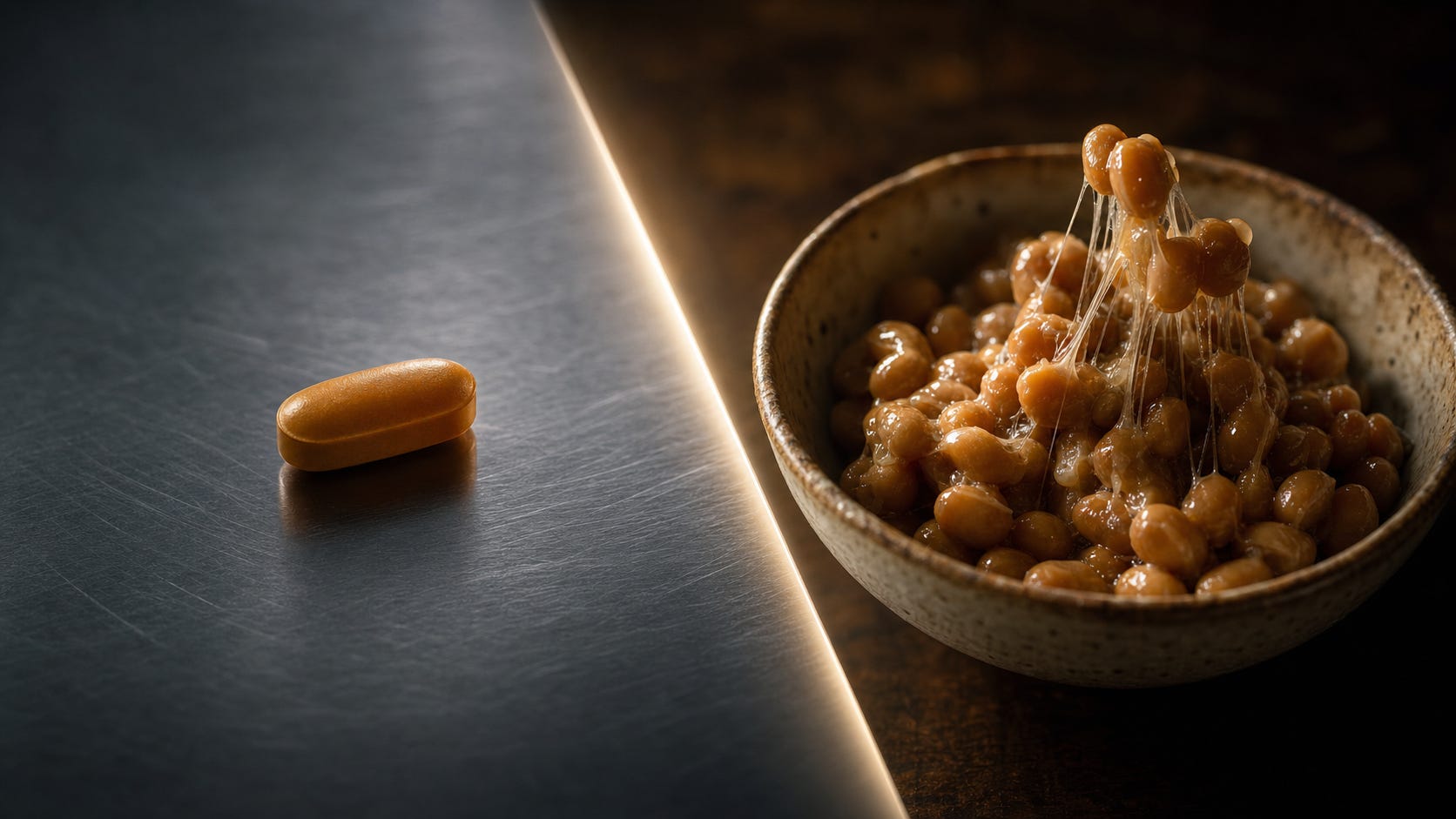
A landmark randomized trial put a fermented-soybean enzyme head-to-head with simvastatin — and on the one measure that predicts heart attacks and strokes, the pennies-a-day enzyme shrank plaque more than three times as much as the drug.
Last year I wrote about the 1,062-patient nattokinase study that showed a fermented-soybean enzyme reversing arterial plaque — but only at a high enough dose. Readers asked the obvious question: fine, but how does it stack up against the drug my cardiologist actually prescribes?
It turns out someone ran exactly that experiment. And almost nobody in the West has heard about it, because it was published in Chinese.
The trial nobody talks about
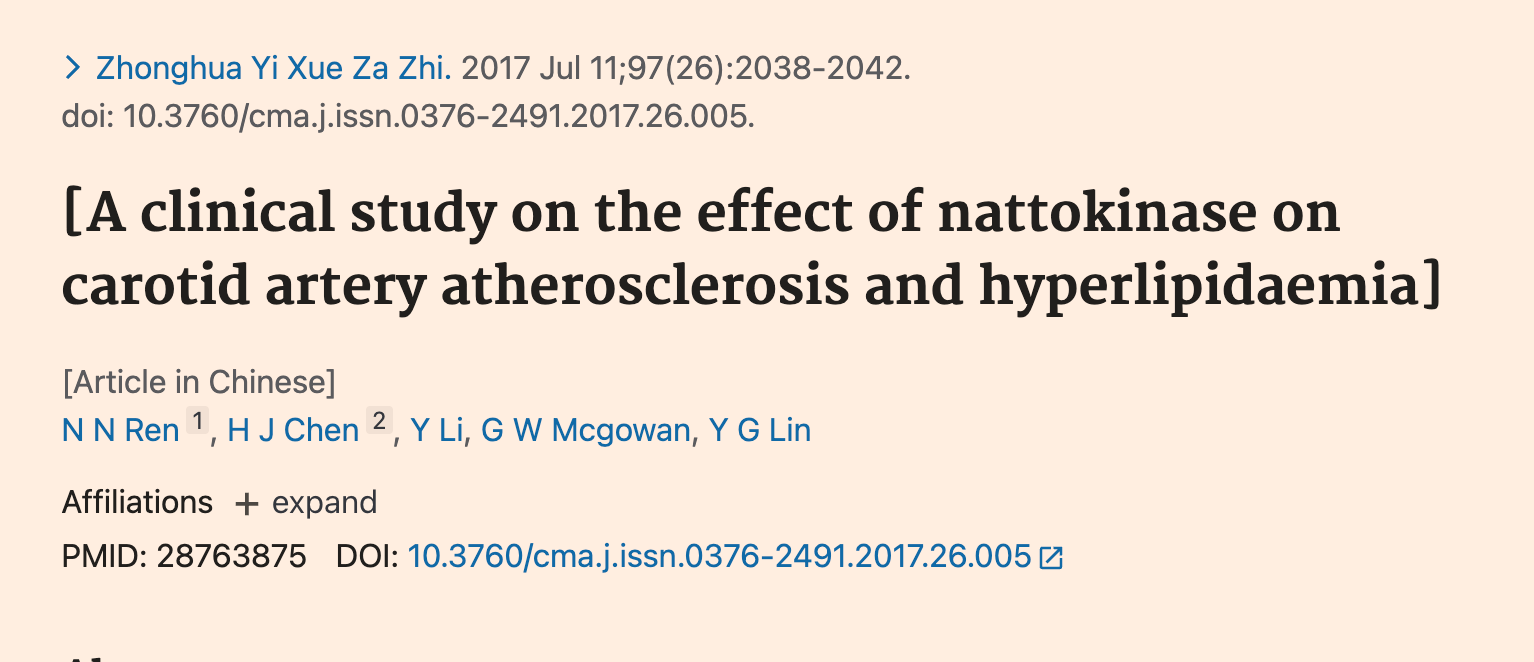
In 2017, researchers at Sun Yat-sen University did something the statin industry does not go out of its way to fund. They took 82 patients with carotid plaque and high cholesterol, randomized them, and gave one group a statin and the other group nattokinase — then imaged their arteries 26 weeks later to see whose plaque actually shrank (Ren et al., National Medical Journal of China, 2017).
Simvastatin, 20 mg/day — a bread-and-butter statin dose
Nattokinase, 6,000 FU/day — a fermented-soybean enzyme you can buy without a prescription
Here is what the ultrasound showed at the end.
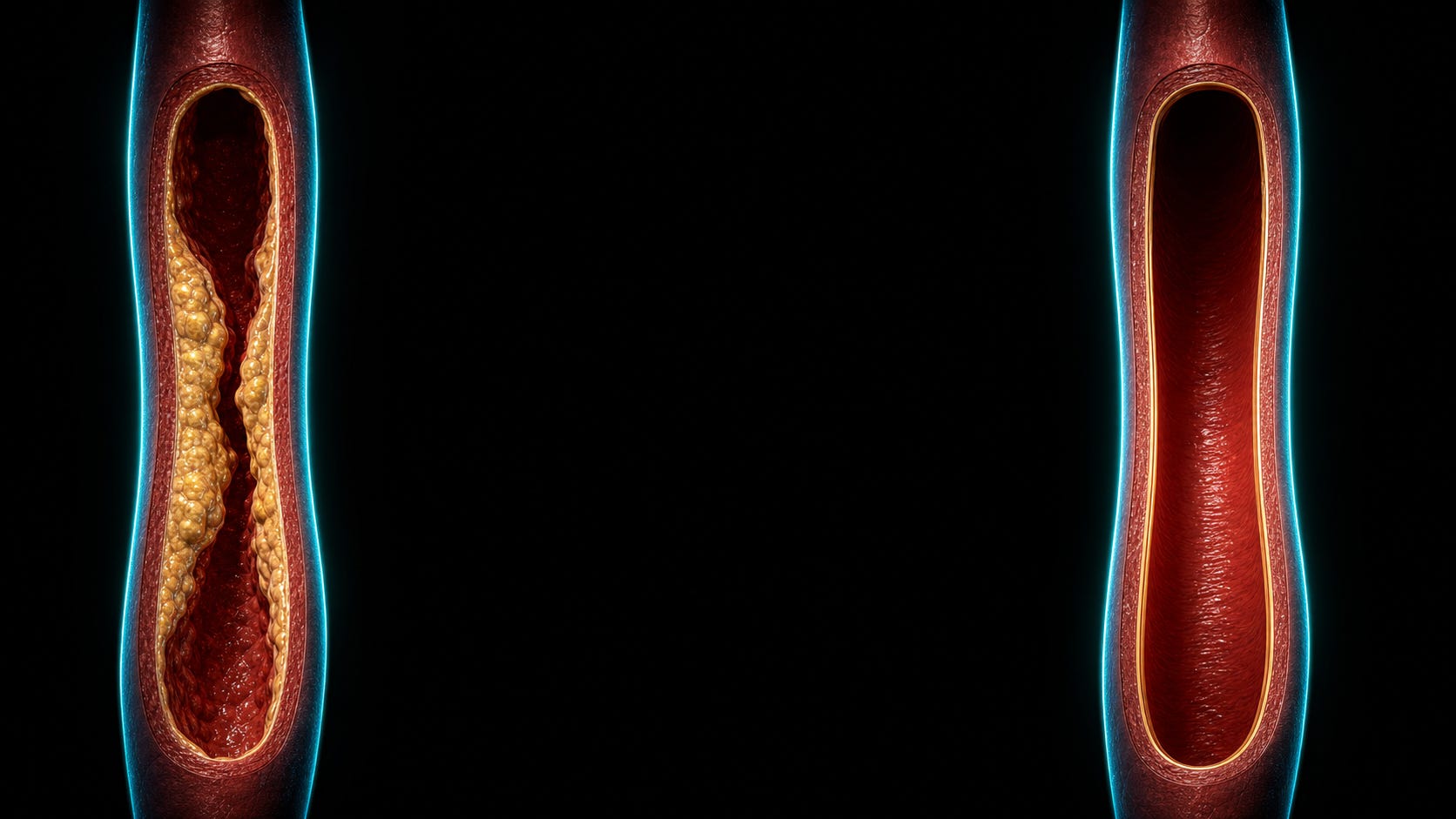
Plaque size, nattokinase group: down 36.6%. Plaque size, statin group: down 11.5%.
The enzyme beat the drug by more than three to one on the thing that clogs arteries and kills people. Statistically significant. Not close (Ren et al., 2017).
Now the part that should end the LDL debate
The statin did win on cholesterol. Simvastatin dropped LDL, total cholesterol, and triglycerides harder than nattokinase did. If lowering LDL were the same thing as treating atherosclerosis — the premise of the last forty years of cardiology — the statin group should have had less plaque.
They had more than three times as much.
And nattokinase did one more thing the statin couldn’t: it significantly raised protective HDL. Simvastatin didn’t move it at all (Ren et al., 2017).
The researchers then checked whether nattokinase’s plaque regression tracked with its cholesterol-lowering. It didn’t (r=0.35, P=0.09). The plaque melted away through a mechanism that had essentially nothing to do with the LDL number (Ren et al., 2017).
Sit with that. The drug that lowered the number most cleared the least plaque. The whole “lower LDL, save the artery” edifice assumes those are the same event. This trial says they aren’t.
Why an enzyme does what a statin can’t
Nattokinase isn’t a cholesterol drug. It’s a clot-dissolving enzyme from natto, the traditional Japanese fermented soybean. It chews through fibrin directly, switches on your body’s own clot-busting system, and disables PAI-1, the molecular brake that keeps clots from dissolving (Urano et al., J Biol Chem, 2001). In animal models it’s about four times more powerful than the body’s own plasmin (Fujita et al., 1995).
Statins throttle the supply of cholesterol. Nattokinase goes to work on the artery itself. One massages a lab value. The other appears to clean the pipe.
Whenever nattokinase comes up, someone drops the NAPS trial — a 3-year, placebo-controlled USC study of 265 people that found no effect on plaque (Hodis et al., 2021). Case closed, they say.
Except: NAPS used 2,000 FU a day.
Ren used 6,000. The 1,062-patient study used 10,800 — and specifically showed that 3,600 FU/day did nothing, while 10,800 reversed plaque (Chen et al., 2022). There’s a dose threshold, and it’s well above what the “definitive” negative trial tested.
So NAPS didn’t disprove the plaque studies. It confirmed the floor. Below the threshold, you get the standard commercial dose, and you get nothing — exactly what NAPS found. The trials aren’t fighting each other. They’re drawing the same dose-response curve. The people waving NAPS around are, without realizing it, proving the dose argument.
I’ll be honest about the rest of the caveats, because I’d rather you hear them from me than from a debunker. Ren’s trial had no placebo group. The big 2022 study was retrospective and had manufacturer-linked co-authors. Nobody has run a trial counting heart attacks and deaths. This is not “settled.” Don’t throw away your medication on the strength of it.
But none of that erases a 3-to-1 plaque advantage over a statin in a randomized trial, or the dose-response signal that keeps reappearing across studies on two continents.
Why You Will Never See Nattokinase Advertised On Your TV
So why hasn’t someone run the billion-dollar trial that would settle this?
Because you can’t patent a soybean. Nattokinase has been eaten for centuries, it’s cheap, it’s safe at normal doses, and no company can own it. No one spends nine figures proving out a molecule their competitors can sell for pennies the next day.
So the evidence stalls right where the skeptics want it — good mid-size trials, no pivotal study — and then they use that exact gap to wave it away. The proof they demand is the proof the funding system is built to never produce for anything unpatentable. Same story as ivermectin. Same story as turmeric. Same story as every healing thing that doesn’t come with a revenue stream stapled to it.
The dose question — and a disclosure I owe you
Here’s the practical upshot of the dose story: the trials that moved plaque used 6,000 to 10,800 FU. The bottle on most shelves has 2,000 — the same dose that flopped in NAPS. If you’re going to pay attention to this research at all, the dose and the standardization are the whole ballgame.
Full disclosure, because you deserve it straight:I’m the founder of GreenMedInfo, and I formulated a nattokinase supplement. I make money if you buy it. I’m telling you that up front so you can weigh everything I say accordingly.
After twenty years buried in this literature, I built CardioNK™ around the 10,800 FU dose used in the research, from Regenerative Organic Certified® natto using a soy-free alternative. It’s a dietary supplement made to support healthy blood flow and vascular function.† It is not a drug. It is not a treatment for heart disease, atherosclerosis, or any other condition, and I’m not offering it as one.
† These statements have not been evaluated by the Food and Drug Administration. This product is not intended to diagnose, treat, cure, or prevent any disease. Nattokinase thins the blood — if you take a blood thinner or antiplatelet drug, have a bleeding disorder, or have surgery coming up, talk to your doctor before taking any nattokinase product.
One serious warning
Nattokinase thins your blood — that’s the whole point, and it’s exactly why you can’t be cavalier. If you’re on a blood thinner, an antiplatelet like aspirin, if you have a bleeding disorder, or you’ve got surgery coming up, do not touch this without a doctor who knows what they’re doing. There are case reports of serious bleeds (Chang et al., 2008) linked to the combined use of aspirin with nattokinase. This is a real pharmacological agent, not a gummy vitamin. Respect it accordingly.
Bottom line
A randomized trial offered the honest comparison the system usually avoids: the statin, or the fermented-food enzyme. On the plaque in the artery — the thing that kills you — the enzyme won by more than three to one, lifted the protective cholesterol the drug (and the statin drug category as a whole) couldn’t budge, and did it without chasing the LDL number at all.
The dose is the key. The mechanism makes sense. And the reason the definitive trial will probably never happen tells you a great deal about how our medical evidence gets made — and nothing at all about whether this is true.
The full nattokinase research library lives at GreenMedInfo.com.
For the product I formulated for myself, and then shared with the world, learn more about CardioNK™ here.
Not medical advice. Nattokinase is a potent blood-thinning enzyme — never start it, stop a medication for it, or combine it with anticoagulants or antiplatelets without a qualified physician’s guidance.
Sayer Ji’s Substack is a reader-supported publication. If this kind of investigation matters to you, consider becoming a free or paid subscriber.