

The UN’s Pact for the Future: A Threat to U.S. Sovereignty and Constitutional Rights
The United Nations' Pact for the Future promises global cooperation, but critics argue it undermines U.S. sovereignty and threatens constitutional rights.

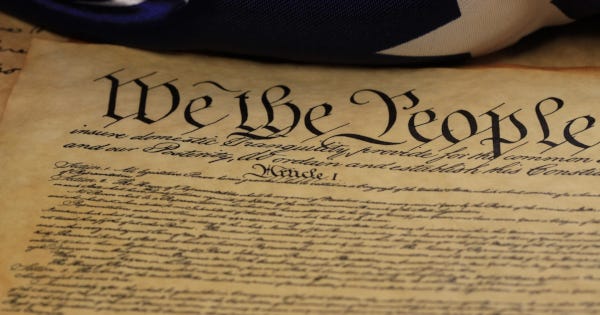
The United Nations' Pact for the Future promises global cooperation, but critics argue it undermines U.S. sovereignty and threatens constitutional rights.
On September 23, 2024, the United Nations General Assembly adopted the Pact for the Future, a comprehensive document aimed at addressing global challenges like climate change, inequality, and artificial intelligence. While the pact is celebrated for its global vision, it has sparked significant concern in the United States, where critics argue it threatens U.S. sovereignty and the Constitution. Several grassroots organizations--including Stand for Health Freedom, Children's Health Defense, and the World Council for Health--are actively opposing the potential infringement on U.S. law and individual rights by global governance frameworks.
The Pact for the Future risks conflicting with the U.S. Constitution, undermining principles like state sovereignty, freedom of speech, and individual liberties. It could open the door to executive overreach and subordination of U.S. law to international regulations, violating core constitutional protections.
1. Treaty Ratification and Executive Overreach
The U.S. Constitution (Article II, Section 2) mandates that all international treaties must be ratified by a two-thirds majority in the Senate. The Pact for the Future encourages heads of state to take unilateral action in implementing global agreements, bypassing legislative oversight. This could lead to executive overreach, where the President might commit to international agreements without Senate approval, a violation of the separation of powers designed to protect American sovereignty.1
2. Subordination of U.S. Law to International Bodies
The Supremacy Clause (Article VI) establishes that the U.S. Constitution is the supreme law of the land, meaning no international law can override it unless properly ratified. The Pact for the Future calls for increased global governance, including through a Global Digital Compact that could impose international regulations on digital technologies, artificial intelligence, and online speech. These could conflict with U.S. First Amendment protections, particularly around free speech, threatening to subordinate U.S. law to international bodies without proper constitutional oversight.2
3. Erosion of States' Rights and the Federalist System
The Tenth Amendment reserves powers not explicitly delegated to the federal government to the states or the people. The Pact for the Future could force U.S. states to adopt policies mandated by international bodies, potentially infringing on states' rights to self-governance. For instance, global environmental and economic policies could override state-specific priorities regarding energy production and economic development, eroding federalism, a core principle of U.S. governance.3
4. The First Amendment: Threats to Free Speech
The Pact for the Future emphasizes efforts to combat misinformation and disinformation, particularly online. While this may seem necessary in the digital age, it raises concerns about the First Amendment, which protects free speech. The pact's push for global regulations through the Global Digital Compact could lead to censorship, especially of dissenting voices, in areas like health, politics, and environmental policy. Organizations such as the Foundation for Freedom Online (FFO) argue that these international regulations could violate U.S. free speech protections.4
5. Second Amendment Conflicts: Disarmament and Firearm Rights
The Pact for the Future commits to disarmament and regulation of small arms, which may conflict with the Second Amendment right to bear arms. Global commitments to disarmament could impose stricter firearm regulations than those currently allowed under U.S. law, infringing on Americans' constitutional rights. The National Health Federation (NHF) and other grassroots organizations are concerned about international mandates that conflict with the Second Amendment.5
6. Health Sovereignty and Medical Mandates
The World Health Organization (WHO)'s alignment with the Pact for the Future could lead to global health mandates that infringe on medical freedom. Organizations like Stand for Health Freedom (SHF) and Children's Health Defense (CHD) warn that international health mandates, such as mandatory vaccinations, could violate constitutional rights to bodily autonomy and informed consent. These mandates could override U.S. law and individual medical decisions, posing a significant threat to personal liberties.6
7. Property Rights and Economic Freedom: The Fifth Amendment at Risk
The Fifth Amendment protects against the seizure of private property without just compensation. However, global sustainability goals outlined in the Pact for the Future could impose land use and environmental regulations that violate property rights. These regulations may infringe on economic freedom and property ownership, particularly if governments are required to comply with global mandates without adequate compensation. Organizations like the World Council for Health argue that these initiatives pose a direct threat to property rights and economic freedom.7
Grassroots Movements Rally for U.S. Sovereignty
Several grassroots organizations are actively fighting to protect U.S. sovereignty from global overreach:
Stand for Health Freedom (SHF) and Children's Health Defense (CHD) advocate for medical freedom and bodily autonomy, opposing global health mandates.
The Foundation for Freedom Online (FFO) fights to protect free speech in digital spaces from global censorship.
The National Vaccine Information Center (NVIC) defends informed consent and resists global health policies that infringe on individual rights.
The Greater Reset and World Council for Health promote decentralization and individual autonomy, advocating for community-based solutions over global governance.
The National Vaccine Information Center (NVIC) is dedicated to safeguarding U.S. sovereignty by advocating for health freedom, opposing international regulations that threaten American health laws, and promoting natural healthcare choices.
These organizations are leading the charge to preserve U.S. constitutional rights in the face of growing global pressures.
Conclusion: Defending the Constitution Against Global Overreach
While the Pact for the Future aims to address global challenges, its potential to undermine U.S. sovereignty and erode constitutional protections is deeply concerning. The U.S. Constitution enshrines the rights of individuals and states to govern themselves, and any international agreement that threatens these protections must be scrutinized.
As a growing coalition of grassroots organizations like Stand for Health Freedom and Children's Health Defense continue their fight to defend U.S. sovereignty, Americans must remain vigilant in safeguarding their constitutional rights from global overreach. Make sure to follow these organizations and join the growing movement to ensure bodily sovereignty and other basic human and medical rights remain intact and protected against increasing attempts internationally to preempt them.
Learn more about the way in which globalism and multilateral organizations are plotting to undermine national sovereignty by reading our latest report:

Breaking: International Governments Are Criminalizing Free Speech Through Global Coordination; New Files Expose Plot
References
1. "Pact for the Future." United Nations. Accessed September 24, 2024. https://www.un.org/en/summit-of-the-future/pact-for-the-future.
2. Lederer, Edith M., and Jennifer Peltz. "At the UN, World Leaders Try to Lay out a Vision for the Future -- and Actually Make it Happen." AP News. September 23, 2024. https://apnews.com/hub/united-nations.
3. Stand for Health Freedom. "Fighting for Health Sovereignty." Accessed September 24, 2024.
https://www.standforhealthfreedom.com
.
4. Children's Health Defense. "Advocating for Health Freedom." Accessed September 24, 2024.
https://childrenshealthdefense.org
.
5. National Vaccine Information Center. "Informed Consent in Health Policies." Accessed September 24, 2024.
https://www.nvic.org
.
6. Foundation for Freedom Online. "Protecting Digital Liberties." Accessed September 24, 2024.
https://www.ffo.org
.
7. World Council for Health. "Global Health Sovereignty." Accessed September 24, 2024.
https://worldcouncilforhealth.org
.