
Reclassifying DCIS: A Groundbreaking Shift in Breast Cancer Diagnosis After Over a Decade of Advocacy
For over a decade, GreenMedInfo has championed the classification of ductal carcinoma in situ (DCIS) as something other than cancer, standing firm against the tide of overdiagnosis and overtreatment.

Quick Summary:
GreenMedInfo’s Advocacy: Since 2008, GreenMedInfo has worked to redefine DCIS based on evidence showing its non-invasive nature.
COMET Study Validation: Recent findings affirm that active monitoring is often safer and equally effective compared to aggressive treatments.
Future Implications: A shift in the DCIS classification could drastically reduce unnecessary treatments and improve patient outcomes.
Early Advocacy and Foundational Work
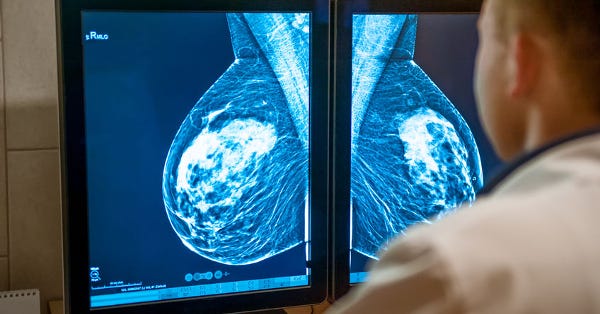
Since its inception in 2008, GreenMedInfo has been at the forefront of challenging the classification of ductal carcinoma in situ (DCIS) as cancer. Drawing from emerging scientific evidence, our database categorized DCIS under broader breast health concerns, questioning its automatic association with invasive cancer (view database here).
Our landmark 2012 article, Mammograms Linked to an Epidemic of Misdiagnosed Cancers, revealed that over 1.3 million women had undergone unnecessary treatments for DCIS due to mammogram-driven overdiagnosis. This critique was part of our broader effort to shed light on the pitfalls of mammography, which often identifies abnormalities that remain non-invasive, and which include planting the radiological seed of breast cancer malignancy into countless women who otherwise would not be at risk of developing it.

In our co-authored book, Cancer Killers, and later in Regenerate (learn more), we delved into the foundational question: "What is cancer?" Without addressing this, we cannot hope to treat it effectively or ethically.
The Turning Tide: Evidence and Advocacy Converge
The recently published COMET (Comparing an Operation to Monitoring with or without Endocrine Therapy) study marks a pivotal moment in redefining DCIS. Its findings demonstrate that women who choose active monitoring experience (i.e. watchful waiting) no greater likelihood of developing invasive cancer within two years compared to those undergoing surgery.

Presented at the San Antonio Breast Cancer Symposium, the study’s principal investigator, Dr. Shelley Hwang of Duke Cancer Institute, emphasized the transformative potential of these results. By shifting toward less invasive interventions, the medical community can mitigate the unnecessary physical and emotional burdens historically imposed on patients. These include profound iatrogenic traumas we explored in our article, originally published in 2017 titled 'Hidden Dangers' of Mammograms Every Woman Should Know About.’

Conflict of Interest in Breast Cancer Awareness Campaigns
It is important to recognize the role that conflicts of interest have played in shaping public perception and treatment protocols for breast cancer. For example, AstraZeneca’s role in launching Breast Cancer Awareness Month (BCAM) in 1985 raises significant concerns. As detailed in our article Covering Causes of Breast Cancer Since 1985, this initiative not only promoted awareness but also steered attention away from environmental and pharmaceutical contributors to cancer risk. AstraZeneca, a company deeply tied to the production of carcinogenic chemicals and breast cancer drugs, has financially benefited from this selective narrative, which underscores the need for unbiased, patient-centered advocacy.
A History of Misdiagnosis and Overdiagnosis
As early as 2012, our article 30 Years of Breast Screening: 1.3 Million Wrongly Treated highlighted the overdiagnosis epidemic caused by classifying DCIS as "stage-zero breast cancer." This misclassification has led countless women - literally millions - to undergo surgeries, radiation, and other invasive treatments for a condition that often remains non-threatening.
Our extensive research collection includes: